Racket Tuning & Customizing
Get the most out of your material.
Many players believe that two identical rackets will play the same. The reality is different. Here's why tuning isn't just for professionals, but for anyone who wants consistent performance.
1. The problem: Factory tolerances
No racket comes perfect from the factory. Manufacturers have tolerances of up to +/- 7 grams in terms of weight and balance. The result: You have two "identical" rackets in your bag, but racket A feels light, while racket B feels sluggish. This ruins your feel for the ball and your consistency.
2. The solution: Matching (aligning)
I measure your rackets to a professional level and adjust them to match each other exactly.
The result: Every racket in your bag has exactly the same weight, the same balance, and the same swing weight. No matter which racket you pick up in a match, you'll have the same feel as with the 100%.
3. Customizing: Upgrade instead of buying new
Are you considering switching to a heavier model but aren't sure? Before you spend hundreds of euros on new clubs, I can tune your current one. We'll selectively increase the weight or adjust the balance so you can test whether a heavier setup (e.g., for more power/plow-through) really suits you.
Ideal for: Talented players in development or players seeking more stability.
4. Pro-Tuning
For ambitious tournament players, I optimize the setup individually. We adjust the swing weight so that you get the perfect balance of power, spin, and maneuverability for your swing.
5. The Tuning Encyclopedia: What are we actually measuring?
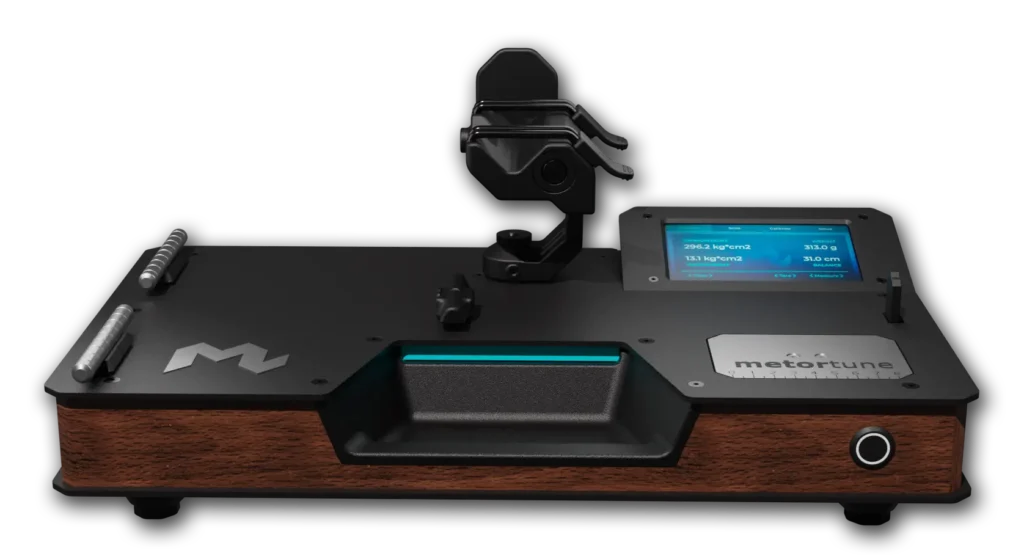
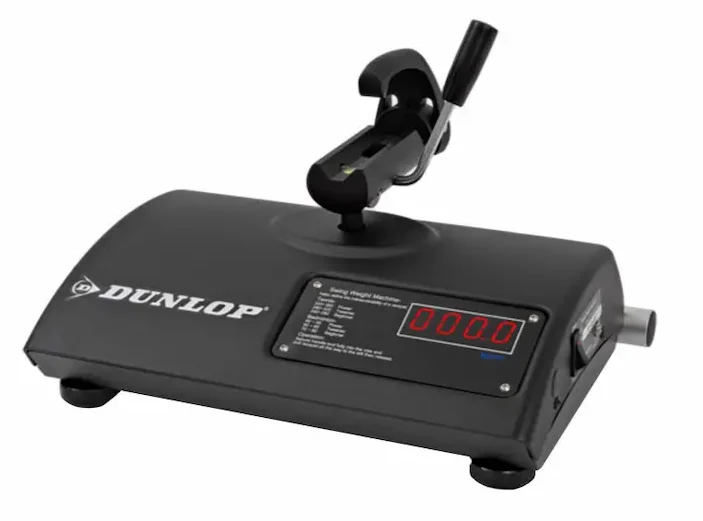
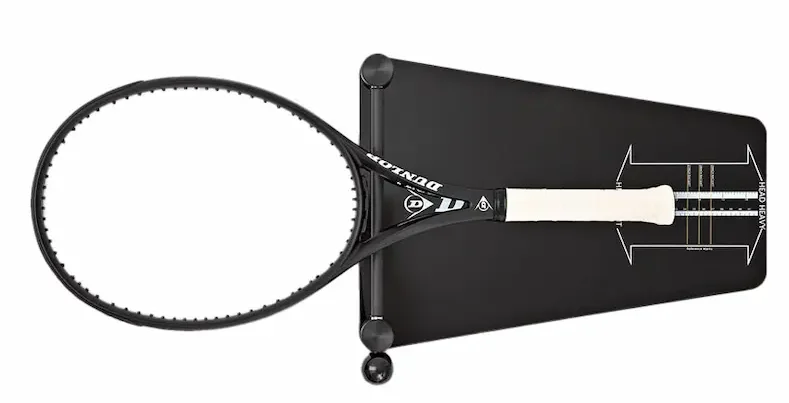
To ensure we know exactly which adjustments to make, I use state-of-the-art diagnostics (like the Metortune). But what do these values actually mean for you on the pitch? Here's a quick overview:
Weight (Static weight) How heavy the racket is on the scale.
-
Low (e.g. 285g): Easy to accelerate, ideal for quick reactions on the network.
-
High (e.g. 320g): Extremely stable. Offers plenty of mass to confidently block hard serves from the opponent.
Balance The point at which the racket is in balance.
-
Handle-heavy (e.g. 31 cm): The racket feels extremely agile. Perfect for a fast, responsive game.
-
Top-heavy (e.g. 33 cm): Creates the "hammer effect". Ideal for generating maximum power from the baseline.
Swingweight (SW) How heavy the club feels during the swing. This is the most important factor for your timing!
-
Low (e.g. SW 305): The racket can be whipped effortlessly, allowing for high racket head speed and topspin.
-
High (e.g. SW 330): Massive power (plow-through). The racket "plows" through the ball, but requires a lot of strength to move it quickly over 3 sets.
Twistweight (TW) Torsional stability. How much does the racket twist if you don't hit the ball perfectly in the center?
-
Low (e.g. TW 13.0): More agile and easier to control with a flick of the wrist, but less forgiving of mistakes.
-
High (e.g. TW 15.5): A fortress! Even if you hit the ball almost on the frame, the racket doesn't wobble. Perfect for stability during fast rallies.
Recoil (recoil weight) Describes how much shock energy the racket absorbs upon impact.
-
Low (e.g. 145): Crisp, direct feedback, but transmits more vibrations to the arm.
-
High (e.g. 170): Maximum arm protection! The racket absorbs the shock instead of transferring it to your wrist or elbow.
Polar (Polarization Index) Indicates where the weight is distributed (at the ends or in the middle).
-
Low (e.g., 0.47 – Depolarized): The mass is located in the center of the club (in the heart). It feels like "pushing" and provides superior distance control for flat shots.
-
High (e.g., 0.52 – Polarized): The weight is concentrated in the racket tip and handle. This creates an extreme whip effect – a dream for modern topspin players.
MGRI (MgR/I) The ratio of maneuverability to swing weight. How quickly can the clubhead be jerked upwards?
-
Low (e.g. below 20.5): The racket head "hangs" slightly during the swing (lag). This is highly desirable for players who want to make the ball very heavy and play massive topspin.
-
High (e.g. above 21.0): The racket head moves through the hitting zone with lightning speed and exceptional directness. Ideal for aggressive players who take the ball early on the rise and block precisely and low.
Effective Mass How much weight is actually behind the ball at the exact point of contact.
-
Low (e.g. 0.16): The racket swings very quickly through the air, but can be pushed away slightly when faced with extremely hard balls from the opponent.
-
High (e.g. 0.20): Massive impact! You produce an extremely "heavy" ball that pushes the opponent far behind the baseline.
ACOR (Rebound Coefficient / Power Index) The physical trampoline effect: How much energy does the frame return to the ball?
-
Low (e.g. 0.42): Maximum control. You have to generate the power yourself, but the ball lands exactly where you aim.
-
High (e.g. 0.53): „"Free Power." The ball practically explodes out of the string bed. Ideal for effortlessly achieving distance on shots without much effort.
Sweet spot position The exact point on the string (measured from the end of the handle) where maximum energy is transferred and the racket does not vibrate.
-
Low/Mid (e.g. 45 cm): Perfect for classic players who hit the ball very flat and centrally in the throat of the racket.
-
Height (e.g. 49 cm): Ideal for modern topspin players who hit the ball extremely high on the racket tip to utilize the full whipping effect.
6. Full transparency: Your digital racket pass
Theory is good, but what about on the court? You're probably wondering now what the actual values of your current racket are and whether the rackets in your bag are truly identical.
At Topspin Service, there are no secrets or guesswork. Every racket I analyze, adjust, or string in my workshop is digitally recorded. You have access to your personal database anytime on your smartphone via the exclusive "My Rackets" customer portal.
• 📊 Your pro specs: Check your exact weight, balance, swingweight, twistweight and all Metortune values (Recoil, Polar, MGRI) live.
• 🧵 Your history: Forgotten which string or how many kilos you played last time? A quick look at the portal is all it takes.
• 🎾 Your DT value: Monitor the dynamic tension loss of your current stringing.
Are you already a customer?
Simply enter your personal code and dive straight into the telemetry data of your rackets!
🔗 Login to the „My Rackets“ portal
My promise to you
I work with the most precise measuring equipment on the market and the highest quality materials (lead, special silicone). Your racket only leaves my workshop when the settings are exactly tailored to your game and 100% accurate. No compromises, no factory tolerances.
Do you want to know what's really inside your racket?
Bring your rackets in for analysis. We'll look at their current performance, identify weaknesses, and discuss what's possible. And once we've optimized your setup in Linz, you'll of course receive access to your digital racket passport.

Services
-
 Racket tuning - price on request
-
Racket fitting for two or more rackets - price on request
-
Overgrip replacement (excluding materials)
€ 0,00
-
Gromet replacement or repair - price on request
-
Handle enlargement (including material) - price on request
-
Handle shell replacement HEAD incl. base handle tape
€ 25,00
-
Re-stringing (with a different string)
€ 12,00
-
Renew base grip (excluding materials)
€ 0,00